
// in this post
Britain got a new Prime Minister on Monday. By Wednesday, the government department responsible for technology had been abolished and AI had a seat at the Cabinet table for the first time in British history. Whatever you make of the politics, and this piece is staying well out of that, if your work touches AI in the UK, the ground just moved. Here's what Andy Burnham has actually done so far, what his record suggests he believes, and my honest read on what it means for anyone building AI into how they work.
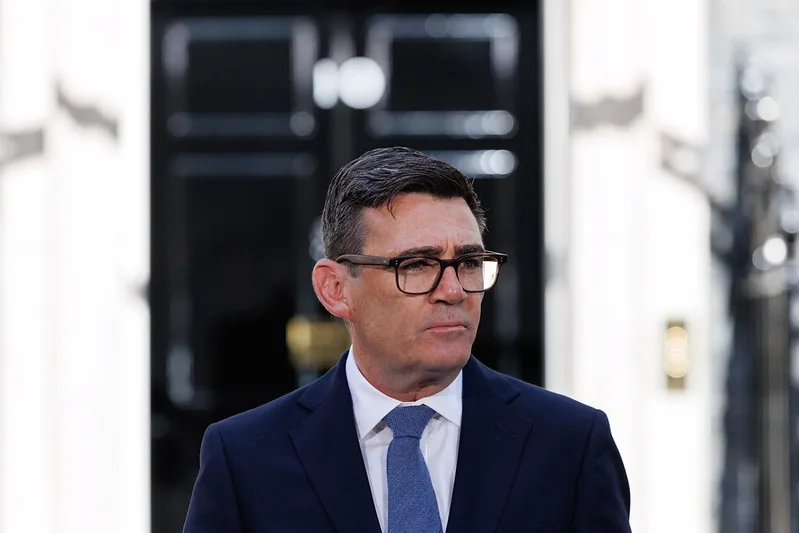
Andy Burnham arrives at 10 Downing Street. Photo: Lauren Hurley / No 10 Downing Street, licensed CC BY-NC-ND 4.0.
What he's actually done, three days in
The facts first. The Department for Science, Innovation and Technology, the home of UK AI policy since 2023, has been scrapped. Most of its responsibilities fold into a new Department for Business, Innovation, Science and Trade under Jonathan Reynolds. The AI-shaped parts move closer to the centre: AI strategy, public sector AI adoption and the AI Security Institute all shift to the Cabinet Office, with a new AI taskforce overseeing the government's approach.
And in his first 48 hours, Burnham appointed Kanishka Narayan as Minister of State for Artificial Intelligence, with full Cabinet attendance. No British government has ever had a dedicated AI minister at the top table before.
The other early call: digital ID is dead. Burnham confirmed as he took office that Labour's planned "Brit card" scheme is scrapped, with the savings redirected to cost-of-living support. He knows this territory better than most: he was the junior Home Office minister who tried to push ID cards through under Blair, and he cited that experience when he came out against the scheme at last year's Labour conference.
Beyond the machinery, the direction is being redrawn. His advisers are reportedly rewriting the national AI strategy away from what they see as an overly US-centric approach, towards British ownership, tech sovereignty and protecting workers from AI-driven disruption. AI Growth Zones, the designated data-centre sites from the previous government, are under review.
What his record says he believes
Burnham isn't a blank page on this. Seven years as Greater Manchester mayor left a long paper trail, and it's more interesting than the Westminster caricature on either side.
He ran the region with the largest AI sector by headcount outside London and the south east, and he didn't run it as a sceptic. He backed responsible AI use across the region and made digital inclusion a signature programme, arguing that digital access should be treated as a basic human right, with a stated ambition to get every under-25, over-75 and disabled person in Greater Manchester online. His advisers' reported plans carry that fingerprint: publishing AI exposure and adoption data for every city region, and making digital inclusion a funded condition of AI-enabled public services.
At the same time, the through-line of his whole career is suspicion of concentrated power. As shadow home secretary he opposed blanket surveillance of internet records, and his opposition to digital IDs, stated plainly at last year's Labour conference, is now government policy. During the by-election campaign that brought him back to Parliament, he called for "strong public control" over key industries and AI, and Bloomberg reported his vow of a tougher stance on Big Tech. His wider economic frame, which he calls Manchesterism, includes building sovereign capabilities in "shipbuilding, energy, AI, and quantum".
So the record says: pro-adoption, pro-inclusion, anti-dependence. He wants more AI in Britain, owned by Britain, on terms that protect the people it disrupts.
The pushback is real too
Plenty of serious people think the opening moves are wrong. Fintech founder Barney Hussey-Yeo put it bluntly: "If Burnham and his team are going to be anti-tech then they need to coherently answer where growth is going to come from and how we reverse the decline." City AM reported warnings that the department shake-up risks a "big mistake" on AI, the House of Lords has questioned the plans, and The Spectator called the shake-up a shambles. The fair version of the criticism: reorganising Whitehall is what governments do instead of deciding things, and moving AI policy mid-flight creates months of uncertainty whatever the destination.
Worth noting, though: not everyone in the middle of that argument reads the sovereignty concern as anti-tech. Richard Whittle, professor of AI and public policy at Salford, welcomed the AI minister appointment and made the point that Britain's dependence on overseas AI infrastructure "is an economic exposure in its own right." That's the strongest steel-man of the Burnham position: you don't have to be hostile to the technology to be uncomfortable with who owns all of it.
What this means for AI adoption going forward
Three days of decisions and twenty years of record. Here's my read on where this goes, and I'd rather be specific and wrong than vague and safe.
Regulation firms up. The UK's current approach, no single AI law, existing regulators applying existing rules, is the one we documented in our guide to AI governance for UK SMEs. I don't think that survives this parliament intact. Everything in Burnham's record points to statute: on workers, on children, on ownership. If you've been treating "there's no AI law" as a reason to have no AI policy, the runway for that is shortening.
Sovereignty reshapes procurement. A strategy rewritten around British ownership, with published adoption data per region and inclusion conditions on public services, changes what government buys and from whom. If you sell into the public sector, expect the requirements to shift under you. If you don't, you'll still feel it second-hand, because public procurement quietly sets the norms everyone else's lawyers copy.
Workers move to the centre of the AI conversation. Burnham's consistent instinct, from Hillsborough to social care, is to side with people going through something done to them. Applied to AI, that means retraining, transition support, and pressure on employers to show workforce plans rather than licence counts. I'll be honest: this is the part I hope he gets right, because the evidence on what happens when adoption is done to people rather than with them is not good.
And the thing that doesn't change: your adoption gap. No Whitehall reorganisation closes the distance between the licences your organisation bought and the people actually using them well. That work is identical under any government: know what's running, write a policy people can follow, decide a strategy worth the name, train people by role. If regulation does firm up, the organisations that did the boring work early will be months ahead of the ones who waited to be told.
Three days in, most of this is still direction of travel rather than law, and I've tried to mark clearly where I'm reporting and where I'm reading signals. I'll come back to this when the strategy itself is published. If your organisation wants the basics in place before the rules arrive, that's the governance strand of a Discovery engagement, or get in touch and we'll talk it through.
FAQ
Who is the UK's first AI Minister?
Kanishka Narayan MP, appointed Minister of State for Artificial Intelligence by Andy Burnham in his first 48 hours as Prime Minister, with full Cabinet attendance. It's the first time in British history that AI has had its own seat at the Cabinet table.
What happened to DSIT under Andy Burnham?
The Department for Science, Innovation and Technology has been scrapped. Most of its responsibilities move into a new Department for Business, Innovation, Science and Trade under Jonathan Reynolds, while AI strategy, public sector AI adoption and the AI Security Institute move to the Cabinet Office, alongside a new AI taskforce overseeing the government's AI strategy.
Will UK AI regulation change under Burnham?
The signals point to a firmer approach than the UK's current principles-based one: his advisers are reportedly rewriting the AI strategy around British ownership, tech sovereignty and protecting workers, and existing programmes like AI Growth Zones are under review. Nothing has reached statute yet, so for now it's direction of travel rather than law.
What should UK businesses do about the change in AI policy?
Nothing that wasn't already worth doing. The no-regrets moves are the same under any government: keep a register of what AI is actually running in your business, write a usage policy people can follow, and train people by role. If regulation does firm up, organisations with those basics in place will be months ahead of the ones waiting to be told.
Sources
- Council on Foreign Relations: Andy Burnham, what to expect from the UK's new Prime Minister
- UKAuthority: DSIT scrapped as Burnham government reshapes Whitehall tech functions
- THINK Digital Partners: Government abolishes DSIT as AI gains a seat at the Cabinet table, 21 July 2026
- TechTimes: UK gets its first Cabinet AI Minister as Burnham abolishes science department, 22 July 2026
- Sifted: Andy Burnham's plan to overhaul AI strategy sparks backlash, 2 July 2026
- University of Salford expert comment: Burnham appoints UK's first dedicated AI Minister, 21 July 2026
- TechPolicy.Press: How will Andy Burnham handle tech policy as UK Prime Minister?
- CNBC: Andy Burnham calls for "strong public control" over industry and AI, 29 May 2026
- Bloomberg: Burnham vows tougher stance on Big Tech, AI, 28 May 2026
- The Conversation: Manchester's digital transformation could be a blueprint for other parts of the UK
- City AM: Burnham risks "big mistake" on AI with tech department shake-up
- TechCrunch: UK government scraps plans for digital ID cards, 21 July 2026
- LBC: Burnham to scrap digital ID scheme in "reset" of Labour's priorities
- Al Jazeera: Burnham's move to scrap UK's digital ID plans earns cheers and criticism, 20 July 2026