
// in this post
This July I'm joining Hack-Nation's 6th Global AI Hackathon: 24 hours to build a working AI product, run online and through local hubs in collaboration with the MIT clubs, alongside teams from MIT, Stanford, Munich, London and Zurich. The strongest builds go into an incubator, and the best pitch in Silicon Valley.
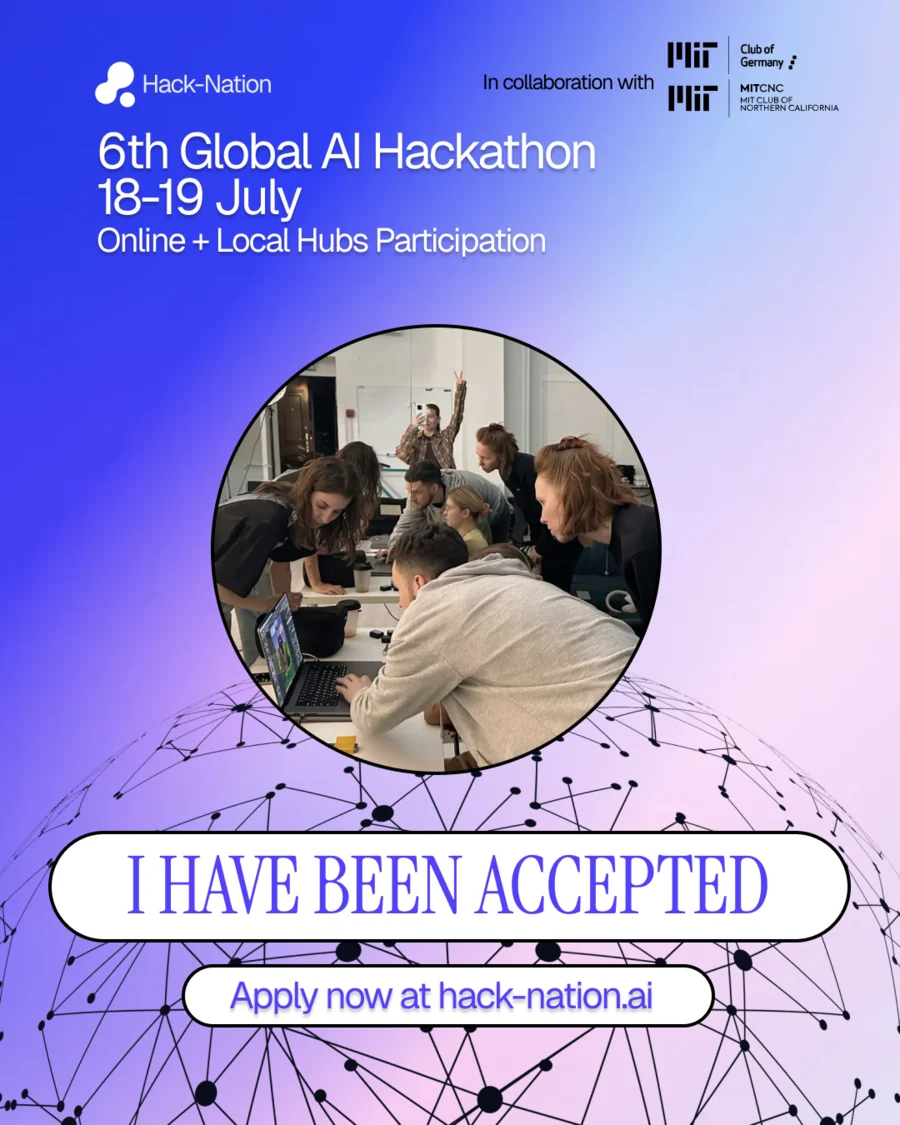
I've spent twenty years in learning, organisational change, and the human side of how work actually gets done. For the last year I've been building with AI in earnest, including Co.llab, the desktop authoring tool I designed, built and now run in closed beta. I'm going in to put both of those to work in the same place.
Where hackathon projects actually fail
Most don't fall over on the engineering. They fall over on the same thing most AI projects fall over on: nobody stopped to check whether the thing being built is useful, whether a real person would reach for it, whether it solves a problem anyone actually has. Applying AI well comes down to understanding the problem, the people, and what good looks like. Coding speed is the smaller part of it. Twenty-four hours with a clock running is a hard test of whether you can tell an impressive demo from something worth keeping, and that's ground I'm comfortable on.
What I'm there to learn
The fastest way I've found to understand where AI is genuinely heading is to build with it under pressure, next to people who are very good at it. You can read every model release and every analysis going and still not know what these tools can do until you've tried to ship something real with them against a deadline. No amount of reading replaces that, and it's the part I'm most interested in.
It also makes literal the case I've been putting to the teams I work with all year. The people getting the most out of AI right now are the ones building with it, not the ones reading about it. If you've been looking for a reason to get properly hands-on with this technology, a weekend like this is as good as any.
I'll write up what we build and what I take from it, the parts that worked and the parts I'd do differently, because the lessons are worth more shared than filed away.
If you're in the UK and want to team up for it, email me at hello@thehumanco.org. I'd be glad of good people to build with.